
You Don’t Need to Reinvent the Wheel — Canada Already Built It
You Don’t Need to Re-Invent the Wheel: Canada’s Wealth of Household Food Waste Avoidance Resources
If you’ve ever stood in front of your fridge wondering whether that container of leftovers is still safe or stared at a wilting bunch of spinach feeling vaguely guilty, you’re not alone. Every household in Canada wrestles with food waste in one way or another.
But here’s the good news: you don’t need to figure it out on your own. In fact, Londoners have access to an impressive range of tools, guides, cookbooks, websites, and community resources designed specifically to help households reduce food waste.
The even better news? Most of these resources are free, online, and easy to access. And for Londoners, the London Public Library adds another layer of support with books, workshops, and digital collections that make learning simple and enjoyable.
In other words, lack of information is no longer a valid excuse. The wheel has already been invented — and it’s rolling smoothly. What’s required now is the willingness to reach out, learn, and put a few new habits into practice. The payoff is worth it: more money in your pocket, less waste in your bin, and a stronger, more sustainable community.
The Myth of “I Don’t Know Where to Start”
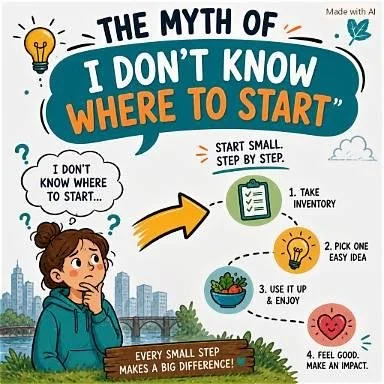
Many Canadians genuinely want to reduce food waste but feel overwhelmed by the idea. They imagine they need complicated systems, expensive gadgets, or chef-level skills. But the truth is far simpler: you just need reliable information and a willingness to try.
And that information is everywhere.
Canada has become a global leader in consumer-focused food-waste education. National organizations, health agencies, food-skills groups, and community nonprofits have spent years building clear, practical, household-friendly resources. These aren’t academic papers or municipal waste audits — they’re everyday tools designed for real kitchens, real families, and real grocery budgets.
It really is simple. If you can search a recipe online, you can access food-waste resources. If you can borrow a book from the London Public Library, you can learn how to store produce properly. If you can scroll through a website, you can find tips on meal planning, freezing, leftovers, and “use-up” cooking.
The barrier isn’t access. It’s simply awareness — and, let’s be honest, a bit of effort.
Canada’s Online Food-Waste Resources: A Treasure Trove for Households
Let’s start with the digital world, because it’s the easiest entry point. A few clicks can open up a universe of practical, trustworthy information.
Ontario Food Collaborative
Take Action on Food Waste – Ontario Food Collaborative – useful household information including a useful handbook - Food Waste Reduction Guide DRAFT
Love Food Hate Waste Canada
Love Food Hate Waste Canada - Canada’s most comprehensive household food-waste resource. Offers storage guides, meal-planning tools, “use-up” recipes, and myth-busting facts designed for everyday families.
Second Harvest – Food Waste Reduction Resources
Home | Second Harvest - Consumer-friendly guides, including the Food Rescue App, plus tips on date labels, safe storage, and creative ways to use ingredients fully.
Half Your Plate – Produce Storage Tips
Home - Half Your Plate - Clear, visual guides showing how to store fruits and vegetables to keep them fresher longer and reduce spoilage.
Meal Planning From Start to Finish
Meal planning from start to finish in 4 steps - Canada.ca - A step-by-step guide to planning meals, shopping intentionally, and avoiding over-buying — one of the biggest causes of household food waste.
Canada’s Food Guide – Reduce Food Waste
Canada's food guide - Canada.ca - Evidence-based tips on planning meals, storing food properly, and using leftovers safely — all tailored to Canadian households.
Understanding Date Labelling
Best before, expiration and more Understanding the date labels on your food - inspection.canada.ca - A consumer-friendly explainer that helps households interpret “best before,” “packaged on,” and “expiration” dates so edible food isn’t thrown out prematurely.
Cook With Less Waste
Take Action – Eating for a Greener Future - agriculture.canada.ca - Tips and techniques for using leftovers, repurposing ingredients, and cooking creatively to minimize what ends up in the garbage.
Ten Reasons to Buy Frozen Fruits and Vegetables
10 reasons to buy frozen vegetables and fruits - Canada.ca - Shows how frozen produce reduces spoilage, extends shelf life, and helps households avoid waste while still eating nutritiously.
Food Matters: North American Household Waste Reduction Resources
Food Matters Action Kit - Part of a broader North American initiative, this resource includes household-level educational tools and guidance for reducing waste at home.
Zero Waste Canada
Zero Waste Canada | Advancing Zero Waste Across Canada - Consumer-focused waste-reduction strategies, including practical ways to cut food waste through better purchasing and creative reuse.
Waste Not Want Not Cookbook – Cinda Chavich
Available through Canadian booksellers and the London Public Library. A Canadian cookbook dedicated to cooking with scraps, using up ingredients, and preventing household food waste.
Sometimes the best food-waste avoidance solutions aren’t found online or in a guidebook — they’re sitting right across the street. Don’t forget the power of asking friends and family who’ve already figured out clever ways to waste less. Some neighbours have brilliant recipe hacks, others swear by simple storage tricks, and a few even organize informal food-sharing or swap nights. From freezing herbs to trading surplus garden veggies, people around you often have practical, lived-in solutions. Reaching out not only helps you learn, but it also strengthens the community — proving that food-waste avoidance is easier when we share what we know.
The London Public Library: Your Local Food-Waste Ally

Londoners have an extra advantage: the London Public Library. It’s one of the city’s most accessible, community-driven institutions, and it’s packed with resources that support household food-waste reduction.
You’ll find:
Cookbooks focused on leftovers, scrap cooking, and budget-friendly meals
Guides on food storage, preservation, and safe handling
Books on sustainable living and zero-waste households
Workshops and community programs that build food skills
Digital collections you can access from home
The library is a treasure chest — and it’s free. If you’re looking for inspiration, practical tips, or new recipes, you don’t need to buy anything or subscribe to anything. You just need a library card.
No More Excuses: The Information Is Here
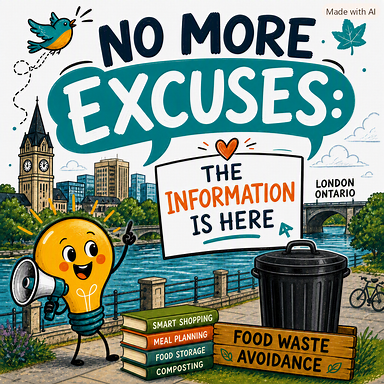
It’s time to say it plainly: lack of information is no longer a valid reason for household food waste. The resources exist. They’re abundant. They’re accessible. They’re Canadian. And they’re designed for everyday people.
What’s required now is effort — not a heroic amount, but enough to build a few new habits:
Checking storage guides before tossing produce
Planning meals with what you already have
Freezing leftovers instead of forgetting them
Learning how to interpret “best before” dates
Using scraps to make soups, stocks, croutons, or stir-fries
Borrowing a cookbook or attending a workshop
Spending five minutes browsing any of the resources provided
These small actions add up. They save money. They reduce waste. They strengthen community. And they protect the environment.
The Rewards: Financial, Community, Environmental
Let’s talk about the payoff — because it’s significant.
Financial Rewards - reducing food waste is one of the easiest ways to save money. London households throw away hundreds of dollars in edible food every year. By using what you buy, storing food properly, and planning meals, you can shrink your grocery bill without coupons, apps, or complicated budgeting. It’s like giving yourself an invisible pay raise.
Community Rewards - when households waste less, communities thrive. Food banks benefit from better donation habits. Local growers see more appreciation for their products. Families share recipes, tips, and successes. Reducing waste becomes a shared effort — something neighbours, schools, and community groups can rally around.
Environmental Rewards - food waste is a major contributor to greenhouse gas emissions and climate change. When food ends up in landfills, it produces methane — a powerful climate-warming gas. Reducing household waste helps protect soil, water, air quality and reduces energy consumption. It’s one of the simplest, most effective environmental actions an individual can take.
You Don’t Need to Be Perfect — You Just Need to Start
Food-waste reduction isn’t about perfection. It’s about progress. It’s about learning, trying, adjusting, and improving. And with the resources available in Canada — especially here in London — you’re not starting from scratch. You’re stepping into a well-supported, well-documented, community-driven movement.
The wheel has already been invented. It’s sturdy, reliable, and ready for you to use.
All you need to do is reach out, learn a little, and take the first step. The rewards — financial, community, and environmental — will follow.