Why a $40 Million Opportunity Should Matter at Election Time in London
Food Waste Matters: Why a $40 Million Opportunity Should Matter at Election Time in London, Ontario
Every election season, Londoners hear promises about affordability, tax relief, and making life easier for households. Candidates talk about trimming budgets, cutting red tape, and finding efficiencies that will “put money back in your pocket.” And every so often, a bold idea catches public attention — something like a $40 million municipal tax reduction.
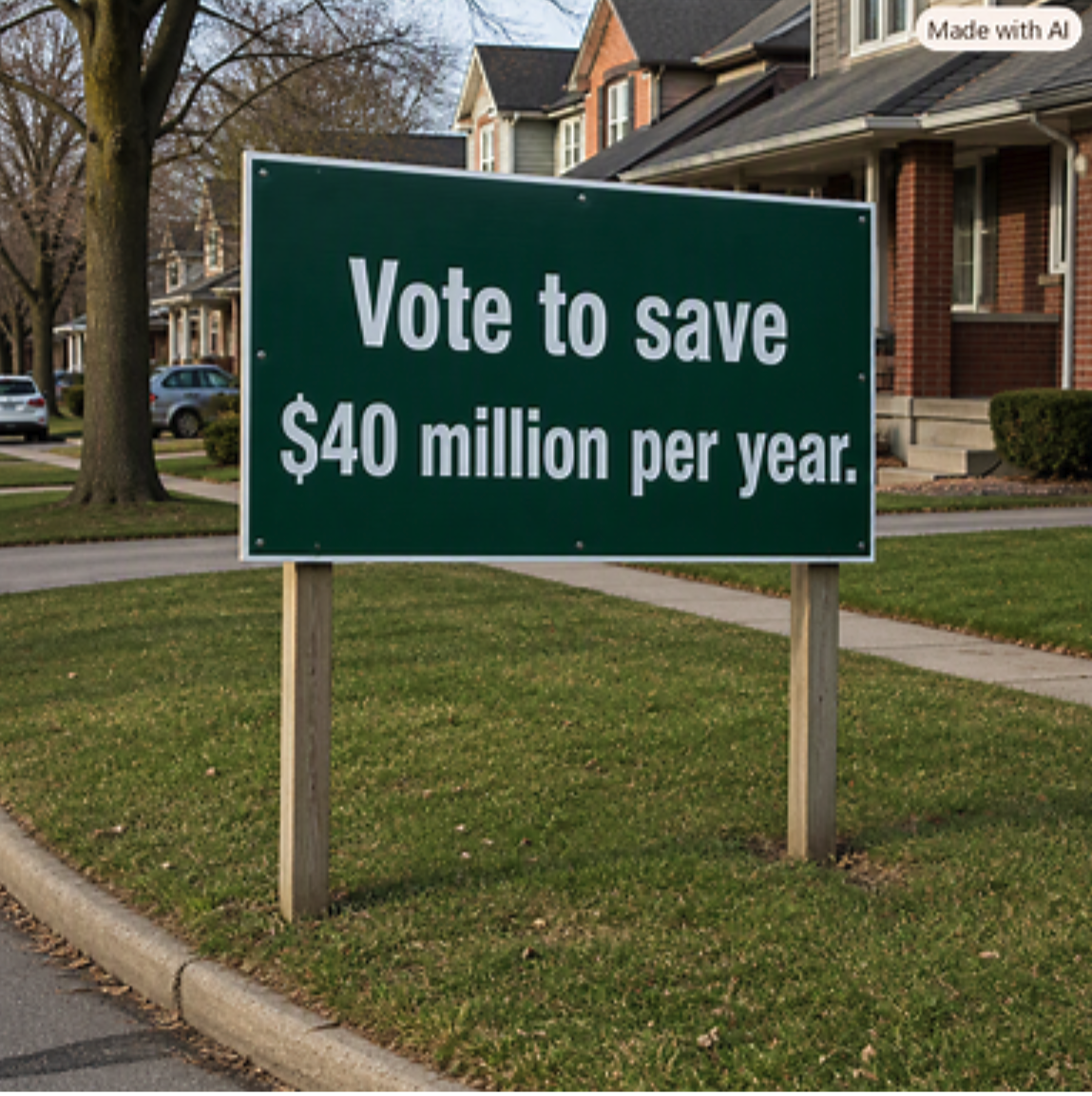
Forty million dollars. It’s the kind of number that makes people pause. It’s big enough to change a city budget, big enough to shift public debate, and big enough to make voters lean in and say, “Tell me more.”
But here’s the twist: Londoners already have access to a $40 million savings opportunity every single year — and it doesn’t require waiting for an election, a council vote, or a campaign promise. It’s sitting right in our kitchens, fridges, Green Bins and garbage bins.
That same $40 million can be saved by London households through avoidable food‑waste reduction. Not theoretical savings. Not abstract environmental benefits. Real money — money that Londoners currently spend on food they never eat. See the May Food Waste Matters issue for further details on how to save $40 million.
This article explores why that comparison matters, why the number is so powerful, and why food‑waste avoidance deserves a place in London’s election‑season conversations about affordability, sustainability, and community well‑being.
The Power of a $40 Million Promise
Municipal budgets are complex, but one thing is simple: a $40 million tax reduction would dominate headlines.
London’s municipal budget is roughly $1.2 billion. A $40 million reduction represents a meaningful shift — enough to lower property taxes, expand services, or reduce financial pressure on households. If a candidate promised such a reduction, it would instantly become a top‑tier election issue.
Why? Because Londoners are feeling the squeeze:
Grocery prices have risen sharply over the past several years.
Housing costs continue to climb.
Utility bills, transportation, and childcare all strain household budgets.
So when voters hear “$40 million in tax savings,” they imagine relief. They imagine breathing room. They imagine a city that is working to make life more affordable.
But affordability doesn’t only come from government decisions. It also comes from household habits — especially around food.
The Other $40 Million: Sitting in London’s Garbage Bins
Research from Western University, the Ivey Business School, and the City of London has shown that London households throw away thousands of tonnes of edible food every year. Not scraps. Not peels. Not bones. Edible food — bread, fruit, vegetables, leftovers, dairy, meat, and prepared meals that could have been eaten.
The financial impact is staggering.
Across the city, avoidable food waste represents more than $150 million in wasted grocery spending every year. That’s money Londoners intended to use to feed their families — money that quietly disappears into the garbage.
If London households reduced avoidable food waste by just 25%, the city would collectively save about $40 million every year.
That’s the same scale as a major municipal tax cut. The same scale as a headline‑grabbing election promise. The same scale as a budget shift that would dominate public debate.
But unlike a tax reduction, this $40 million doesn’t require political negotiation, new legislation, or a change in government. It requires awareness, small habits, and community commitment.
Why This Comparison Matters at Election Time
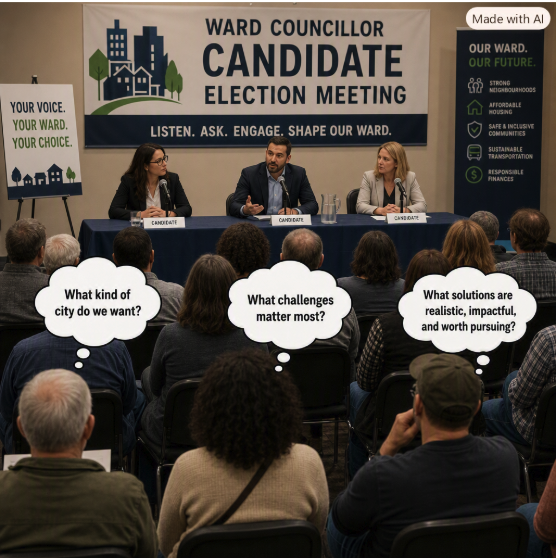
Election seasons are moments when cities reflect on their priorities. They’re moments when voters ask:
What kind of city do we want?
What challenges matter most?
What solutions are realistic, impactful, and worth pursuing?
Affordability is always near the top of the list. And rightly so. But affordability isn’t only about taxes — it’s also about how households spend money, and how much of that money is unintentionally wasted.
By comparing a hypothetical $40 million tax reduction with the $40 million households can save through food‑waste avoidance, Londoners can see affordability through a broader, more empowering lens.
It reframes affordability as a shared responsibility.
Governments influence affordability through taxes and services. Households influence affordability through daily choices. Both matter. Both have power.
It highlights a savings opportunity that doesn’t depend on election outcomes.
Food‑waste avoidance is available to everyone, every day, regardless of who wins or loses.
It shows that sustainability and affordability are not competing priorities.
Reducing food waste is good for the environment and good for household budgets. It’s rare to find a solution that checks both boxes so clearly.
It encourages candidates to talk about practical, community‑level solutions.
Election conversations often focus on big systems — taxes, infrastructure, policing, transit. But food waste is a local, household‑level issue that affects everyone. It deserves space in the affordability conversation
The Household Impact: What $40 Million Means for London Families
Let’s break the number down. London has roughly 190,000 households. A $40 million reduction in avoidable food waste translates to:
About $210 saved per household per year
Over five years, that’s more than $1,000 — the cost of a new appliance, a weekend getaway, or a chunk of savings
Keep this in mind. In 2025, the average tax increase was about $260 on the annual property tax bill for a home valued at $250,000. Collectively, $40 million could pay for new facilities or programs to help make London an even more desirable community.
And this is only the financial side. The environmental and social benefits multiply the impact.
The Environmental Impact: A Cleaner, More Sustainable London
Food waste is one of the largest contributors to methane emissions at the W12A Landfill. Methane is a greenhouse gas up to 86 times more powerful than carbon dioxide over 20 years.
Reducing avoidable food waste:
Lowers landfill emissions
Protects landfill capacity
Reduces the energy, water, and land used to produce replacement food
Supports London’s climate‑action goals
A $40 million tax reduction would be financially meaningful. A $40 million reduction in food waste would be financially, environmentally, and socially meaningful.
The Social Impact: A More Balanced Food System
London is a caring city. Thousands of residents rely on community food programs, including the London Food Bank, to help feed their families.
When some households throw away edible food while others struggle to access enough, it highlights a painful imbalance. Reducing avoidable food waste doesn’t mean donating leftovers — but it does mean creating a more stable, thoughtful food system where households buy what they need, use what they buy, and reduce pressure on emergency food supports.
A city that wastes less is a city that cares more effectively.
Election Time Is About Choices — And This Is One We Can Make Ourselves
During election season, Londoners evaluate promises, platforms, and priorities. They weigh the value of tax reductions, service improvements, and long‑term investments.
But the comparison between a $40 million municipal tax reduction and $40 million in household food‑waste savings reminds us of something important:
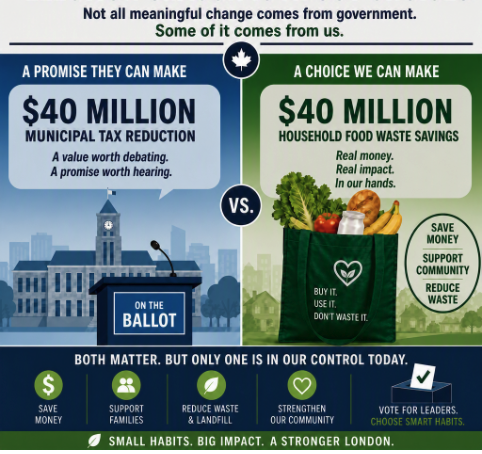
Not all meaningful change comes from government. Some of it comes from us.
Avoidable food waste is one of the simplest, most accessible affordability solutions available to London households. It doesn’t require waiting for a campaign promise. It doesn’t require a council vote. It doesn’t require a new program or a new tax structure.
It requires awareness. It requires small habits. It requires a community that sees the value in using what it buys.
A Call to Action for London — During Election Season and Beyond
As London heads into another election cycle, affordability will be front and centre. Candidates will talk about taxes, budgets, and financial relief. And voters will listen closely — because affordability matters.
But Londoners should also remember the other $40 million. The one sitting in our fridges. The one disappearing into our garbage bins. The one we can reclaim without waiting for political change.
Food Waste Matters — not just for the environment, not just for community well‑being, but for household affordability on a scale that rivals major municipal tax decisions.
If a candidate promised $40 million in tax savings, it would catch your attention. So should the fact that London households can save the same amount — starting today.