
Why Food Waste Matters in London, Ontario
Food waste isn’t just a global issue—it’s a London, Ontario issue. Every year, households across London throw away thousands of tonnes of perfectly good, edible food, much of it avoidable. That waste adds up to well over $150 million in groceries purchased but never eaten. It’s a staggering number, and it represents more than spoiled leftovers or wilted produce. It reflects lost money, unnecessary environmental strain, and added pressure on community resources like the London Food Bank.
But here’s the hopeful part: food waste is one of the most solvable environmental challenges we face. Small, simple changes at home can dramatically reduce waste, save money, and support a more sustainable, resilient London. This article introduces why food waste matters here—and why your everyday choices truly make a difference.
The Local Picture: Waste We Can’t Afford
Londoners are proud of their city—its parks, its neighbourhoods, its community spirit. This was demonstrated throughout the month of April as part of London Clean & Green. Yet behind the scenes, our collective food habits tell a different story. Research from Western University and the Ivey Business School including work supported by the City of London found that London households discard enormous amounts of avoidable food each year.
“Avoidable” means edible food: bread, fruit, vegetables, leftovers, half‑eaten sandwiches, dairy, and meat. It does not mean peels, bones, or eggshells—food that has more limited uses.

Avoidable food waste is easy to spot. In this case, the person likely placed too much on their plate.
Food Fact #1
London households throw away thousands of tonnes of edible food every year—enough to fill dozens of garbage or Green Bin trucks every single week—representing well over $150 million in wasted grocery spending.
This is food that Londoners intended to eat. It’s the strawberries that softened too quickly, the leftovers forgotten at the back of the fridge, the bread that went stale before anyone reached the last slices.
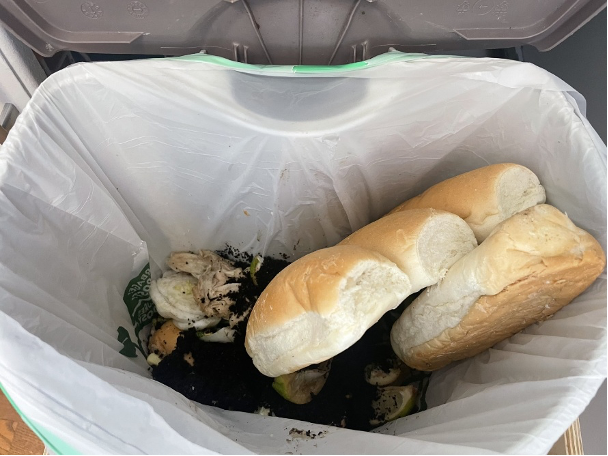
Stale rolls in a kitchen catcher as part of London’s Green Bin Program – this was avoidable with better planning
When you add it all up, with todays’ grocery prices, the average London household loses $1,000–$1,500 every year to food that could have been enjoyed but wasn’t. That’s the equivalent of several weeks of groceries, a month of household expenses, or money that could go towards a family vacation—quietly disappearing into the garbage.
Beyond the financial hit, this wasted food represents a massive loss of resources. Every tomato, loaf of bread, or package of chicken required water, land, labour, transportation, refrigeration, and packaging. When food is wasted, all those resources are wasted too. The environmental footprint of avoidable food waste is far larger than most people realize.
The Social Impact: A Community That Cares
Food waste also has a human dimension. London is a caring city, and thousands of residents rely on community food programs, including the London Food Bank, to help feed their families. When wealthier households waste food, it highlights a painful imbalance: some families can afford to throw food away while others struggle to keep enough in the house. This gap deepens inequality, strains community resources, and underscores why reducing avoidable food waste matters for everyone in London.
Food Fact #2
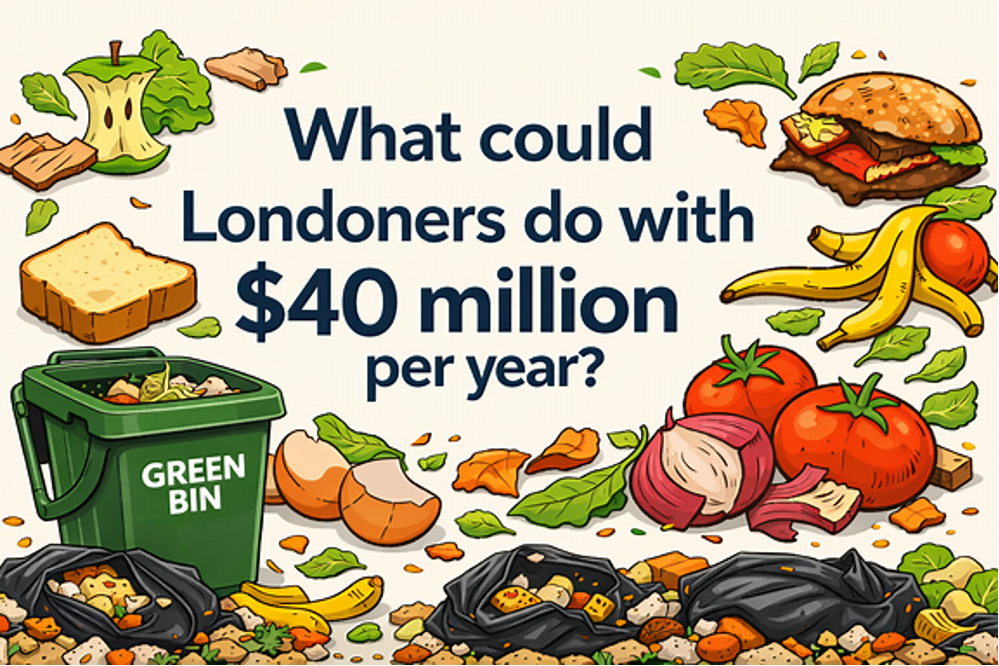
If Londoners cut 25% of their avoidable household food waste, the community would keep more than $40 million every year—money that would otherwise be thrown out with uneaten food.
That $40 million doesn’t just vanish; it represents real economic power. It’s money that could stay in household budgets, support local businesses, and circulate through London’s economy. Reducing waste by even a quarter would mean families have more financial breathing room, especially during a time when grocery prices are rising and household budgets are stretched.
This shift would also ease pressure on community food programs. While reducing waste doesn’t mean donating leftovers, it does mean creating a more balanced food system—one where households buy what they need, use what they buy, and reduce the strain on emergency food supports.
A community that wastes less is a community that supports itself more effectively.
Food Fact #3
When food decomposes in London W12A Landfill, it produces methane—a greenhouse gas up to 86 times more powerful than carbon dioxide over a 20‑year period (according to the Intergovernmental Panel on Climate Change) — making food waste one of the biggest contributors to landfill emissions in London.
This methane is a fast‑acting climate pollutant, and food waste is one of the largest sources of it in municipal landfills across Canada. In London, this means avoidable food waste is directly contributing to climate change at the local level. It also accelerates the filling of the W12A Landfill and consuming landfill space that should be used for materials that truly require disposal.
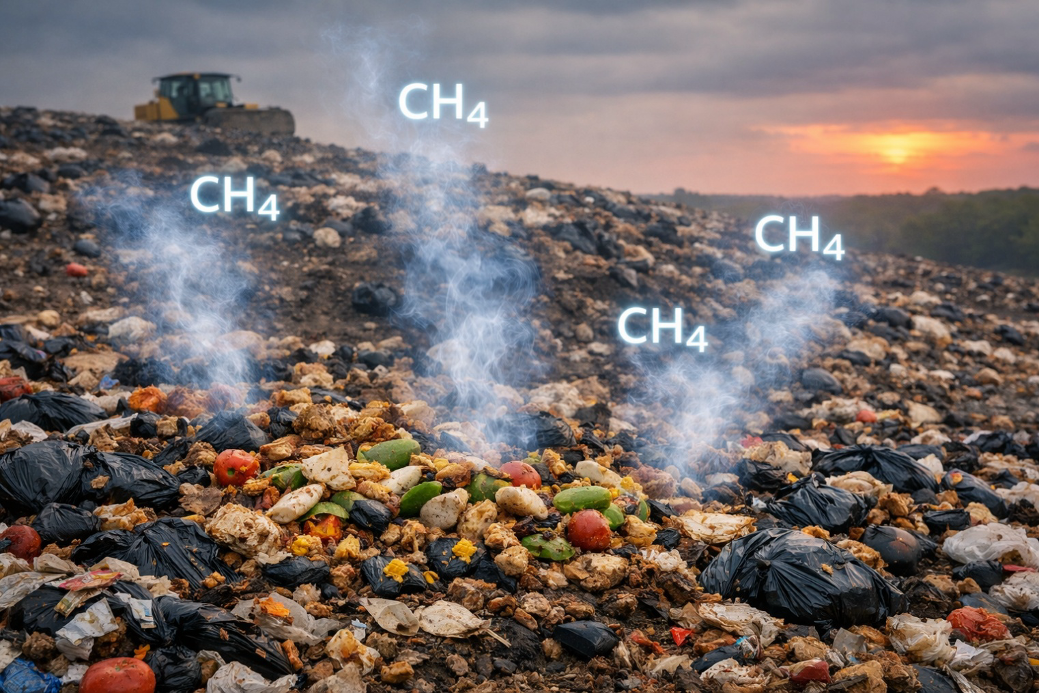
Methane (CH₄) emissions at a landfill
Even with the Green Bin program helping divert organic waste and the landfill gas collection and recovery system burning the methane, the most impactful solution is preventing food waste before it happens. Every meal eaten instead of discarded reduces emissions, protects landfill capacity, and supports London’s long‑term sustainability goals.
Food Fact #4
Co-Benefits of food waste avoidance - Reducing food waste doesn’t just help the environment and your wallet. It also brings a range of co-benefits (positive outcomes) that ripple through the community.
Healthier eating - Planning meals and using what you have, often leads to more home cooking and fewer impulse purchases.
Less clutter, more clarity - A tidy fridge and pantry make it easier to see what you have—and what you enjoy eating.
Stronger community resilience - When families waste less including those with limited resources, food programs can redirect more of their energy from urgent, stop‑gap support toward building lasting, community‑wide food security.
Lower household stress - Knowing what’s in your kitchen and how to use it reduces the daily “What’s for dinner?” scramble.
A simple but impactful climate action - Food‑waste avoidance is one of the simplest climate actions households can take because it cuts emissions before they’re created. Every meal eaten instead of discarded prevents methane from forming in landfill and reduces the energy, water, and resources needed to produce replacement food.
In Summary - A London Where Food Matters
Food waste may seem like a small issue—one wilted lettuce, one forgotten yogurt, one uneaten portion of pasta. But across a city of nearly 435,000 people, those small amounts of food waste add up to enormous environmental, economic, and social consequences.
Additionally, as powerful: small actions, multiplied across thousands of households, can create meaningful change.
London is already a leader in sustainability, community care, and innovation. Avoiding food waste is another opportunity to show what’s possible when a city works together. Whether you’re a seasoned meal planner or just starting to pay attention to what gets tossed, every step counts.
Food Waste Matters – Understand it, Avoid it, Compost it — waste less today, nourish tomorrow.
Learn more at: Food Waste Matters
https://www.londonfoodbank.ca/food-waste-matters
Jay Stanford is the former Director, Climate Change, Environment & Waste Management for the City of London, Ontario. He can be reached HERE