Why This New Series Begins Now
Food connects us. It nourishes our bodies, shapes our cultures, and brings people together around tables, celebrations, and traditions. Yet across Canada—and right here in London—an astonishing amount of food never fulfills its purpose. Perfectly good food is tossed into the garbage, lost in refrigerators, or discarded before it ever reaches a plate. This avoidable waste has real consequences: economic, environmental, and social. It strains household budgets, contributes to greenhouse gas emissions, and diverts resources that could otherwise support families in need.
Working closely with the London Food Bank, we are launching Food Waste Matters, a new series dedicated to helping Londoners understand, reduce, and rethink food waste. After 40 years working in waste management, environmental protection, and community sustainability—30 of those with the City of London—I’ve seen firsthand how small, everyday actions can create meaningful change. I’ve also listened to hundreds of stories from residents who want to do better but aren’t always sure where to start.
This series will highlight practical strategies, local stories, community innovations, and the broader systems that shape how we buy, store, cook, and value food. To add depth and perspective, contributions will come from a range of voices, including Barb Stanford (my wife and partner), who has long championed the power of sharing knowledge to help others.
Our goal is simple: to focus the growing amount of information and empower households, workplaces, and communities with tools that make food go further. Together, we can build a culture where food is respected, resources are conserved, and waste is dramatically reduced—one meal at a time.
Food waste is not an isolated issue. It connects to several related topics that Londoners are already thinking about, including:
How to reduce waste at home—from Green Bin tips to understanding the new industry-driven recycling program and why participation matters more than ever
The co-benefits of everyday actions, and how one change can solve multiple problems at once (a concept known as multi-solving)
What the circular economy means for London’s local economy
How we find common ground on the importance of severe weather and climate change, even as public debate becomes more polarized
How often does this occur at your home or your neighbours?
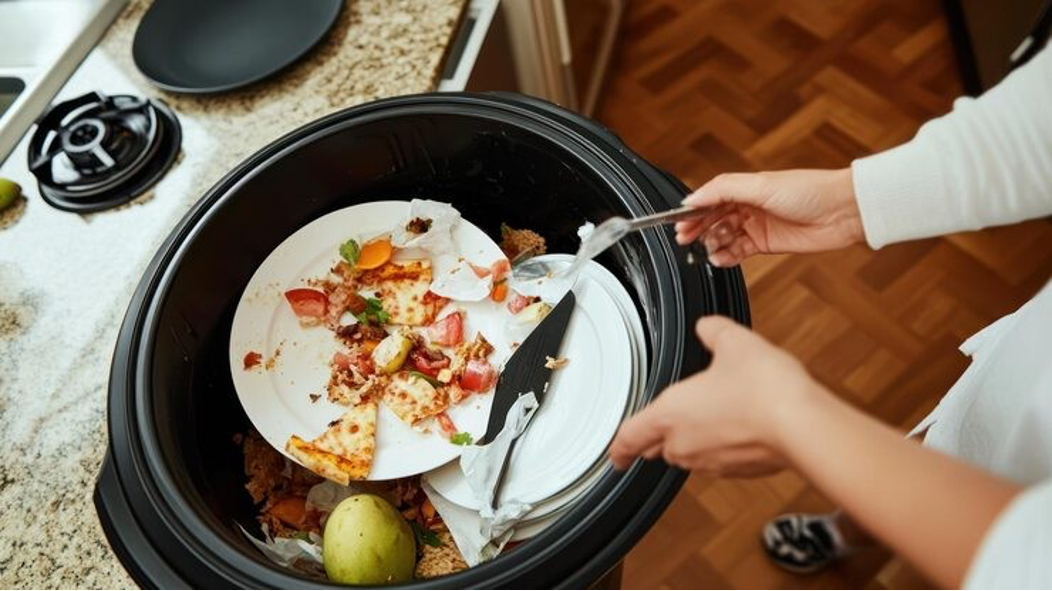
How often does this occur at your home or your neighbours?
Food Waste Matters: A Fresh Look at an Old Problem
Food waste isn’t new. For generations, people have struggled with leftovers, spoilage, and the occasional forgotten item at the back of the fridge. What is new is the scale. Today, nearly 60% of food produced in Canada is lost or wasted along the supply chain. Households account for a significant portion of that—often unintentionally. Busy schedules, confusing date labels, oversized packaging, and shifting eating habits all play a role.
Here’s the encouraging part: household food waste is one of the most solvable environmental challenges we face. Unlike global energy systems or international climate agreements, reducing food waste starts right at home, with simple habits and small shifts in thinking. And the benefits ripple outward. When we waste less food, we save money, reduce emissions, conserve resources, and support a more resilient local food system and economy.
This series will unpack those connections. Each month, we’ll explore a different theme—from meal planning and smart shopping to creative leftovers, freezer strategies, composting, and the science behind food safety. Understanding the barriers that make food waste reduction difficult is key, and we’ll share tips that are practical, realistic, and adaptable to any household. We’ll also highlight London-based programs, community partners, and local champions who are already making a difference.

Simple items such as meal planning help reduce food waste including using leftovers.
Why Food Waste Matters for London
London has long been a leader in waste reduction, environmental innovation, and community creativity. Our residents have embraced recycling, supported the Green Bin program, and participated in countless initiatives aimed at reducing our environmental footprint. A greater focus on food waste is the next frontier.
When food ends up in the garbage, it doesn’t just disappear. It travels to the City’s W12A Landfill or other nearby sites, where it takes up valuable space and breaks down to produce methane—a potent greenhouse gas.
But the issue goes beyond the environment. Food waste also has a social dimension. At a time when thousands of families rely on the London Food Bank and community food programs, throwing away edible food feels especially urgent to address. By reducing waste, we not only save money but also create opportunities to redirect surplus food to those who need it most.
What You Can Expect from This Series
Practical, everyday guidance
Clear, simple strategies and on-line links for planning meals, storing food properly, using leftovers creatively, and understanding best-before dates.
Local stories and community insights
Spotlights on London organizations, volunteers, businesses, and innovators working to reduce food waste and strengthen our food system.
Environmental context
Accessible explanations of how food waste connects to climate change, resource use, and sustainability.
Tools for households and workplaces
On-line links to checklists, how-to guides, seasonal tips, and behaviour-change strategies that make reducing waste easier and more intuitive.
A positive, solutions-focused approach
Food waste can feel overwhelming, but this series is about empowerment—not guilt. Every small improvement counts. This is not about lectures or being lectured.
A Final Thought (for now)
Food is too valuable—economically, environmentally, and culturally—to be treated as disposable. By paying attention to what we buy, how we store it, and how we use it, we can make meaningful changes that benefit both our households and our community.
Food Waste Matters is here to support that journey. We’re excited to share what we’ve learned, highlight the great work happening across London, and help build a future where food is respected, resources are conserved, and waste is dramatically reduced.
Let’s get started.
—
Jay Stanford is the former Director, Climate Change, Environment & Waste Management for the City of London, Ontario. He can be reached at Jay.stanford2025@gmail.com