Avoidable vs. Unavoidable Food Waste
Understanding Avoidable vs. Unavoidable Food Waste — and Why It Matters for London, Ontario
Food waste is one of the most urgent environmental and affordability challenges facing Canadians today. Whether we’re talking about rising grocery bills, the cost of managing waste, or the greenhouse gases produced from the energy consumed to grow food and get it to your plate, the impact is felt in every household — including right here in London, Ontario.
But not all food waste is the same. In fact, understanding the difference between avoidable and unavoidable food waste is one of the most powerful steps Londoners can take to reduce waste, save money, and make the most of the City of London’s Green Bin program.
This blog breaks down these two categories, shares the latest Canadian and London-specific statistics, and highlights four key facts every household should know. The takeaway is simple: avoidable food waste is where we can make the biggest difference, and unavoidable food waste is what truly belongs in the Green Bin.
What Is Avoidable Food Waste?
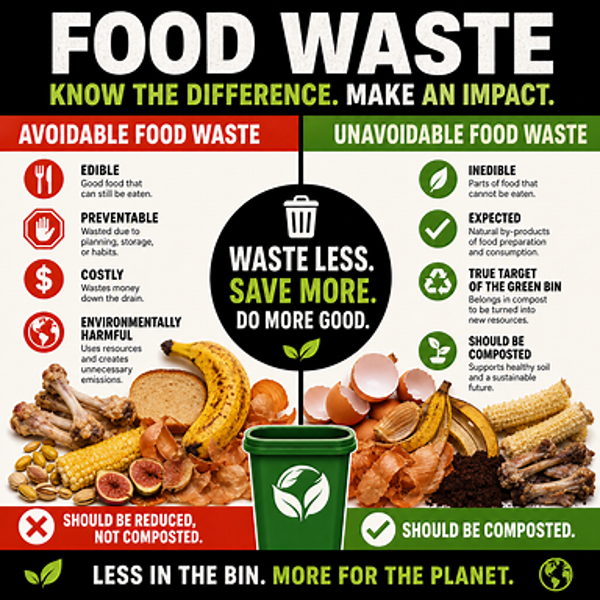
Avoidable food waste refers to edible food that could have been eaten but wasn’t. This includes:
Spoiled fruits and vegetables
Leftovers that were never eaten
Plate scrapings
Food forgotten in the fridge
Items tossed because they passed their best-before date
Bread, dairy, and produce purchased in excess
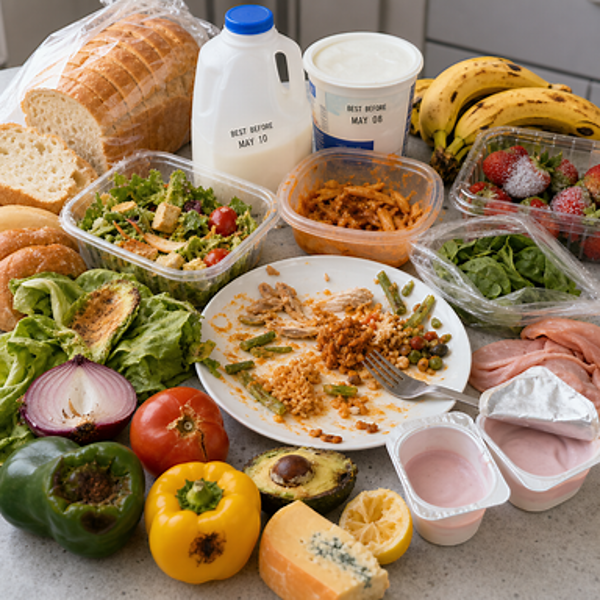
Avoidable food waste – managed properly and with care, none of these food items need to become waste or items for the Green Bin.
According to the Ivey Business School’s 2024 report Good to the Last Bite?, the majority of household food waste in London is avoidable. Avoidable food waste is the most environmentally damaging category because:
It wastes all the resources used to grow, transport, and store the food.
It produces methane in the landfill, a greenhouse gas 25 times more potent than CO₂.
It represents money spent on food that was never eaten.
What Is Unavoidable Food Waste?
Unavoidable food waste refers to food by-products that, for the most part, cannot be eaten, such as:
Eggshells
Bones
Coffee grounds
Banana peels
Onion skins
Corn cobs
Fruit pits
These materials are not edible and not preventable. They are the true target of London’s Green Bin program.
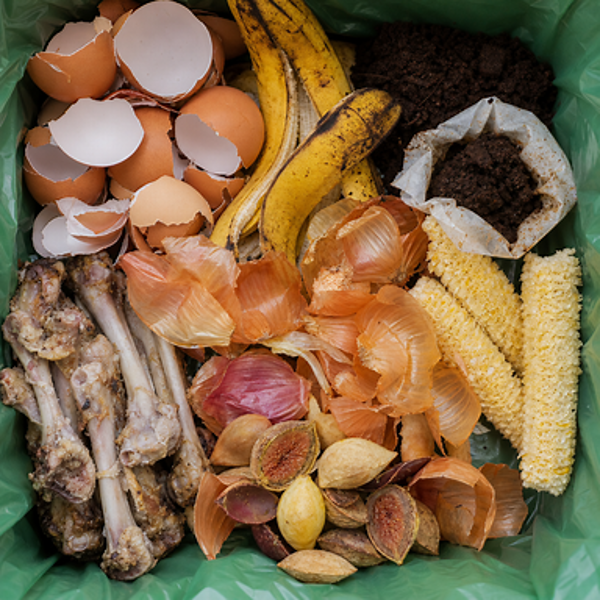
Unavoidable food waste – these food items are the true target for a Green Bin program (if available). They are more difficult to reduce for most households.
The City’s Green Bin system was really designed to divert unavoidable food waste from landfill — turning it into compost instead of methane. It was not designed to promote the creation of avoidable food waste. But the Ivey report found something surprising: after the Green Bin was introduced, London households may be throwing away an average of 50 kg more food per year.
This suggests that some households may be using the Green Bin as a “permission slip” to waste more edible food — even though avoidable food waste still carries environmental and financial consequences. These findings have appeared elsewhere with Ontario Green Bin programs.
Why the Difference Matters
Understanding the difference between avoidable and unavoidable food waste helps Londoners:
Use the Green Bin correctly - The Green Bin is really meant for unavoidable waste — not edible food that could have been saved.
Reduce household costs - Canadian households throw away $700–$1,800 worth of avoidable food every year.
Ivey Business School estimate: $700 per household
Second Harvest estimate: $1,800 per household
Londoners throw away between $1,000 and $1,500 per household (May issue of Food Waste Matters https://www.londonfoodbank.ca/food-waste-matters/tf4309dedlaxd8q6xrreofduz6kpfg)
Lower environmental impact - Avoidable food waste contributes 25.7 million metric tonnes of CO₂ emissions annually — equivalent to 253,000 flights from Toronto to Vancouver.
Make London’s waste system more effective - When households put avoidable food waste in the Green Bin, it increases collection volume, processing costs, and contamination risk — while doing nothing to reduce the root problem.
Four Key Facts Londoners Should Know
Most household food waste in London is avoidable — and preventable. About 2/3rds of food waste generated is avoidable. This means the biggest opportunity for change is in our kitchens, not our Green Bins.
Avoidable food waste costs Canadians up to $25 billion every year. When scaled nationwide, household food waste adds up to $10–$25 billion annually. This is money Canadians are literally throwing away — and London households are part of that picture.
The Green Bin is really meant for unavoidable waste — not edible food. London’s Green Bin program is an important environmental initiative, but the Ivey report found that households may have thrown away 50 kg more food per year after the program launched. This highlights a critical misunderstanding: the Green Bin is not a solution for avoidable food waste.
Avoidable food waste is rising in Canada — despite increased awareness. Second Harvest’s 2024 update shows that avoidable food waste has increased by 6.5% since 2019. This means education, planning, and household habits matter more than ever.
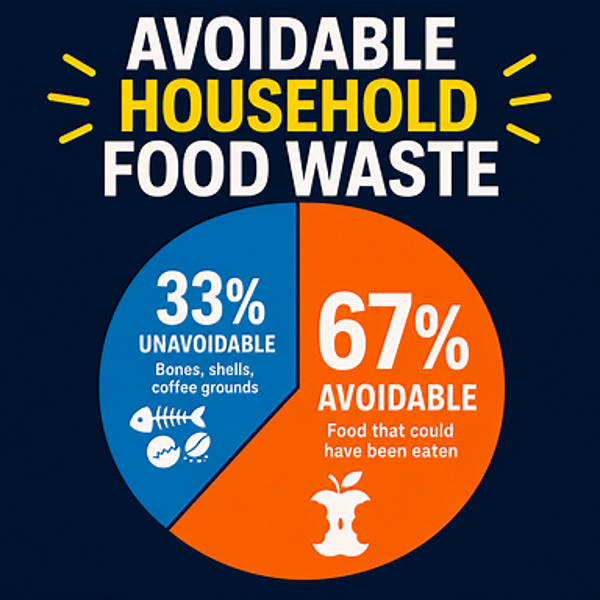
Studies suggest that about 2/3rds of all food waste generated at the household level is avoidable.
Why Avoidable Food Waste Is the Real Opportunity
Avoidable food waste is the category where households have the most control. Small changes can make a big difference:
Meal planning reduces overbuying. Overbuying is one of the top drivers of avoidable waste. Bread, dairy, fruits, vegetables, and meat are the most commonly wasted foods because households purchase more than they can use.
Proper storage extends shelf life. Simple actions — like storing herbs in water, keeping apples away from bananas, or freezing leftovers — can prevent spoilage.
Understanding best-before dates prevents unnecessary tossing. Best-before dates account for 23% of avoidable food waste in Canada’s supply chain. These dates indicate quality, not safety — meaning many foods are still perfectly fine to eat.
Education works. In one London study, households given meal-planning tools, storage tips, and leftover guides significantly reduced their food waste.
The Green Bin Paradox: A London-Specific Challenge
As noted earlier, the Ivey report uncovered a surprising trend: after London introduced the Green Bin, households may have thrown away 50 kg more food per year. This finding has been discovered in other Canadian cities as well.
This doesn’t mean the Green Bin is a bad idea — far from it. It means:
Some households may feel less guilty about wasting edible food.
The Green Bin may unintentionally encourage tossing food instead of preventing waste.
Education is needed to reinforce that avoidable food waste is still waste, even if it goes in the Green Bin.
The solution is to use the Green Bin after thinking about how to reduce avoidable food waste as the priority – never abandon the Green Bin.
Six Easy Actions - How Londoners Can Reduce Avoidable Food Waste Today
Plan meals before shopping. A simple weekly plan reduces impulse buying and ensures food is purchased with purpose.
Store food properly. Learning a few storage techniques can extend the life of produce by days or even weeks.
Use leftovers creatively. Soups, stir-fries, wraps, and omelettes are excellent ways to use small amounts of leftover food.
Freeze more. Freezing is one of the most effective tools for preventing waste — from bread to berries to cooked meals.
Understand best-before dates. Most foods are safe well past their best-before date. Trust your senses: look, smell, taste.
Keep a “use-me-first” bin in the fridge. This simple trick helps households prioritize foods that need to be eaten soon.
Conclusion: A Clear Path Forward for London
Avoidable and unavoidable food waste are not just definitions — they are powerful tools for understanding how Londoners can reduce waste, save money, and support a more sustainable community. In summary:
London has an opportunity to lead the way in reducing avoidable food waste while making the most of its Green Bin program. With awareness, education, and small household changes, we can make a measurable difference — for our wallets, our city, and our planet.