
Food Waste Matters: What We Waste Most — And Why It’s Time to Change
Food waste is one of the most urgent, costly, and solvable problems facing London and all Canadian households today. Even as grocery prices climb and families stretch their budgets further than ever, Canadians continue to throw out staggering amounts of edible food every week. Recent research from Western University reveals not only what we waste most often, but why it keeps happening — and how we can finally turn the tide.
This article brings together Western University’s findings and insights from three additional Ontario and Canadian sources, to paint a clear picture of the foods most commonly wasted, the behaviours driving that waste, and the steps households can take to save money, reduce environmental impact, and make better use of the food they buy.
What Western University Found: A Clear Pattern in Household Waste
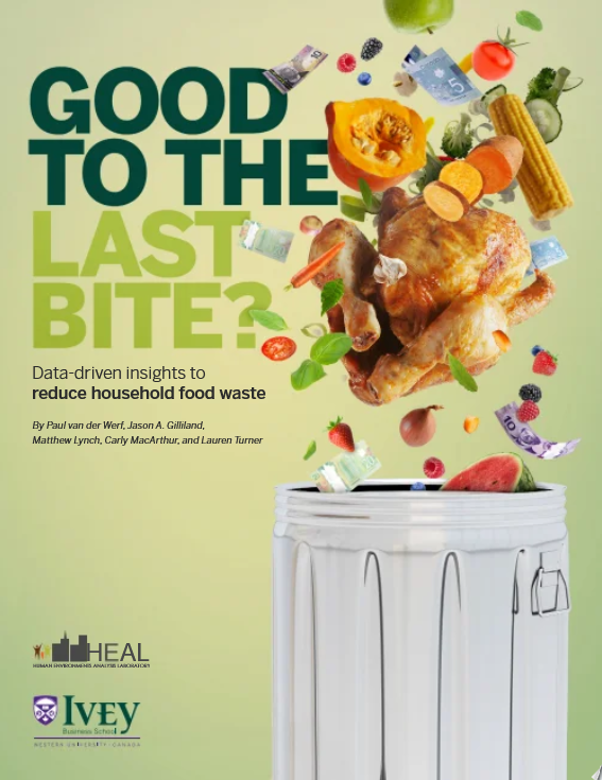
In a major study of 1,263 London, Ontario households (2023 - 2024), Western University’s Ivey Centre for Building Sustainable Value and the Human Environments Analysis Laboratory (HEAL) uncovered a consistent ranking of the foods Canadians waste most often. Households were found to discard six portions of edible food every week, with even higher waste in homes with children. The most frequently wasted items were:
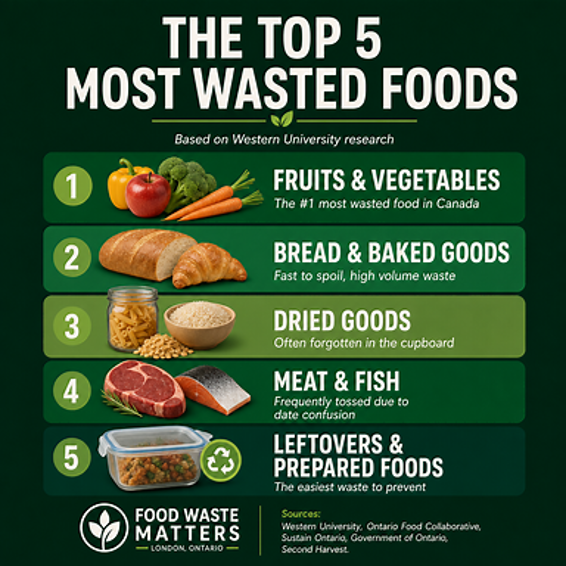
1. Fruits and vegetables
2. Bread and baked goods
3. Dried goods
4. Meat and fish
These findings form the backbone of our Top Five Most Wasted Foods list later in this article.
Western’s research also highlights a critical behavioural insight: cost savings, not environmental concern, is the strongest motivator for reducing household food waste. When families understand the financial impact — up to $1,800 per year in avoidable waste — they are far more likely to change their habits.
What Other Ontario and Canadian Sources Reveal
To build a fuller picture, Western’s findings were compared with three additional sources:
Ontario Food Collaborative – Food Waste Reduction Guide
This guide reports that 51% of discarded food in Canada comes from households, with the average home wasting up to $1,500 annually. Most of this waste is nutritious, perishable food — especially produce.
Sustain Ontario – Food Waste Policy Review (2025)
Sustain Ontario identifies household waste as a major contributor to the 2 million tonnes of food wasted annually in Ontario. Their findings emphasize that waste is highest in perishable categories, including produce and baked goods.
Second Harvest (Referenced in Western’s research)
Second Harvest estimates that Canadian households waste more than $1,800 worth of food annually, with produce, bread, and meat among the most frequently discarded items.
Across all four sources, the pattern is unmistakable: perishable foods — especially fruits, vegetables, and bread — dominate Canada’s household food waste.
Make it stand out
The Top Five Most Wasted Foods in Canada
Drawing from Western University’s research and three other authoritative Ontario/Canada sources, here is the definitive ranking of the foods Canadians waste most often:
Fruits & Vegetables
The #1 most wasted food in every source reviewed.
Fresh produce spoils quickly, is often bought in excess, and is frequently forgotten in the fridge. Western University found fruits and vegetables to be the most commonly discarded items in London households, a finding echoed across all other sources.
Why we waste it:
Overbuying due to sales or bulk packaging
Poor fridge organization
Misjudging ripeness or spoilage
Lack of meal planning
Bread & Baked Goods
Bread is the second most wasted food in Western’s study and appears prominently in all other sources.
Why we waste it:
Mold growth
Buying multiple loaves or large packages
Stale texture leading to early disposal
Dried Goods (Pasta, Rice, Cereals)
While dried goods have long shelf lives, they are still frequently wasted due to pantry clutter, over-purchasing, and expiry confusion.
Why we waste it:
Forgotten in the back of cupboards
Duplicate purchases
Misunderstanding “best before” dates
Meat & Fish
Meat and fish are often thrown out due to misinterpretation of “best before” dates, a key finding in Western’s research.
Why we waste it:
Confusion between “best before” and “expiry”
Fear of foodborne illness
Poor freezer management
Leftovers & Prepared Foods
While not always listed as a separate category, leftovers consistently appear in waste audits and behavioural studies. Western’s research notes that households discard multiple portions of edible food weekly, much of it prepared food.
Why we waste it:
Over-preparing meals
Lack of interest in eating the same meal twice
Poor storage practices
Make it stand out
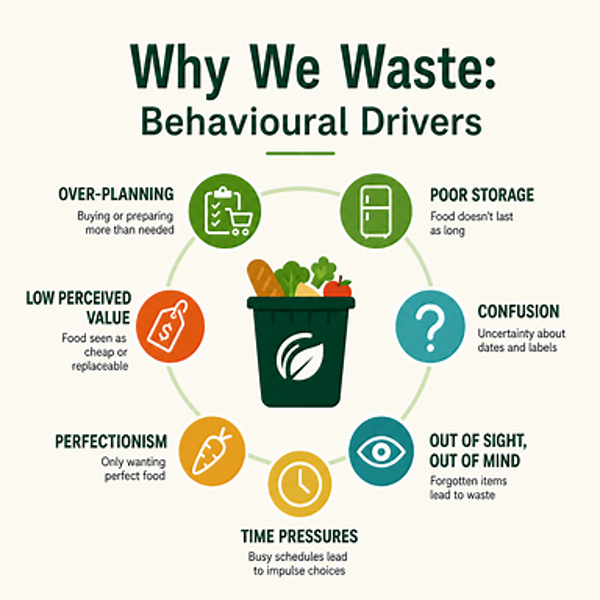
Why We Waste: Behavioural Drivers
Across all sources, several behavioural patterns emerge with five highlighted below:
Over-planning or over-buying
Bulk deals and large packaging sizes encourage households to buy more than they can use.
Poor Storage & Organization
Food spoils when it’s not stored properly or becomes hidden in cluttered fridges and cupboards.
Confusion about Dates and Labels
“Best before” is mistaken for “unsafe after,” leading to premature disposal of meat, dairy, and packaged foods.
Lack of Meal Planning
Without a plan, food sits unused until it spoils.
Household Dynamics
Larger households waste more, especially when not all members share responsibility for food management.
Conclusion: Food Waste Matters — And We Can Fix It
Across all four sources, the message is clear: Londoners and all Canadians waste the most food in categories that are the easiest to save. Fruits, vegetables, bread, dried goods, and meat dominate our Green Bins and waste bins — but with simple changes in planning, storage, and awareness, households can save hundreds of dollars a year while reducing their environmental impact.
Food waste isn’t just a kitchen problem. It’s a climate problem, a financial problem, and a community problem. But it’s also a problem we can solve — one grocery list, one meal plan, and one leftover container at a time.